
Article text
Climate change represents one of the most significant challenges of the 21st century, affecting ecosystems, economies, social relations, human societies and global peace (Buhaug et al. 2023). Rising temperatures, shifting weather patterns, and an increase in the frequency of extreme weather events pose considerable risks to the environment and the stability of global social systems. While the impacts of climate change are felt worldwide, certain regions are particularly vulnerable due to their geographical and environmental characteristics. The Nordic region, including Scandinavia, is one such area that faces specific and growing challenges related to climate change (International Federation of Red Cross and Red Crescent Societies - Climate Centre 2024).
The Fragile Socio-Ecosystems of the Arctic and Nordic Regions
The Arctic and Nordic regions are highly sensitive to climate shifts, with the Arctic warming at more than twice the global average (Rantanen et al. 2022; Yamanouchi and Takata 2020; Serreze and Barry 2011). This has led to rapid ice melt, reduced sea ice cover, and a subsequent rise in sea levels, all of which have direct consequences for Scandinavian countries such as Norway, Sweden, Denmark, and Iceland. Fragile socio-ecosystems in the far north are undergoing dramatic transformations, threatening biodiversity and the livelihoods of indigenous populations such as the Sámi. These environmental changes also pose significant risks to coastal communities, particularly in Iceland, Sweden and Denmark, where rising sea levels increase the likelihood of coastal erosion and flooding.
Despite these growing challenges, Scandinavian countries have been leaders in climate mitigation and adaptation efforts. Nations such as Norway, Sweden, and Denmark have committed to ambitious carbon reduction targets and have made significant investments in renewable energy sources. Iceland, with its abundant geothermal resources, serves as a global model for green energy production. However, the scale of the climate crisis demands not only national efforts but also robust international cooperation. Global initiatives, such as the Paris Agreement, are critical in ensuring coordinated action to address climate change, particularly in vulnerable regions like the Nordic countries.
Fig. 1.. Annual Mean Temperature Anomalies in the Arctic and Globally (1950–2021)
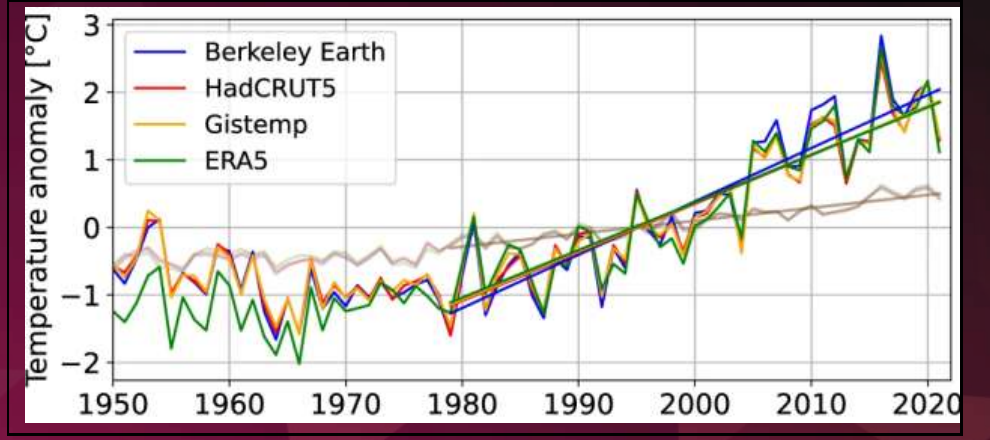
Source: Rantanen et al. 2022, p.2
The Relevance of Climate Migration for the Nordic Region: A Focus on Iceland
The study of climate-induced migration is particularly relevant to the Nordic region, including Iceland, due to the unique environmental challenges these countries face. In Iceland, the melting of glaciers and changing patterns in precipitation and storms threaten not only infrastructure but also agricultural productivity and the fishing industry (Malinauskaite et al. 2022; Eddudóttir, Erlendsson, and Gísladóttir 2020; Greipsson 2012; Bjarnason et al. 2021), which are central to the nation’s economy. These environmental stressors could lead to both internal displacement, as people relocate from affected areas, and external migration, as climate refugees seek safer regions within or beyond Scandinavia. Internal migration within Iceland is becoming an increasing concern as climate change exacerbates natural hazards such as flooding and coastal erosion. Iceland’s coastal communities, which are highly dependent on fishing and tourism, are particularly vulnerable to the effects of rising sea levels and extreme weather. As these risks intensify, there is potential for significant population movement from rural and coastal areas to urban centres, such as Reykjavik, straining infrastructure and social services. The displacement of communities also carries socio-economic consequences, including the loss of livelihoods and cultural heritage, which could exacerbate social inequalities within the country.
External migration also presents challenges for Iceland, as the country may become both a destination for climate refugees from other regions and a source of migrants as Icelanders themselves seek more stable environments. Given Iceland’s strategic location between Europe and North America, it could face pressure from migrants displaced by climate change in other Arctic and Northern Atlantic regions. Moreover, Iceland's small population and limited resources mean that an influx of climate refugees could put additional pressure on the economy, housing, and public services. Addressing both internal and external climate migration will require comprehensive policies that promote resilience and sustainable adaptation.
Climate Refugees and Human Security
Climate refugees, often referred to as environmental migrants, are individuals who are forced to leave their homes due to sudden or progressive environmental changes caused by climate change (Baldwin 2020). While there is no formal, internationally agreed-upon definition of climate refugees under existing refugee laws, the term highlights the growing number of people displaced by environmental factors. In the context of human security, climate-induced migration poses significant threats. Human security, a broad concept encompassing the protection of individuals from threats to their survival, livelihood, and dignity, is particularly relevant when considering how climate change undermines access to resources, stable living conditions, and the overall safety of populations.
The relationship between climate change and forced migration is complex and multi -dimensional. As Louise van Schaik and Tammo Bakker (2017, p.3) argue in their analysis, Climate-Migration-Security: Making the Most of a Contested Relationship, ”despite the lack of precise knowledge about the causal links between climate change and migration, the potential scale of the issue, combined with population growth projections, makes it politically impossible to ignore”. The authors also noted that estimates of how many people could be displaced due to climate change vary widely because of methodological challenges and the choice of variables used in projections. Nevertheless, it is clear that large populations, over 200 million people living in vulnerable coastal regions and up to 4.4 billion at risk from water shortages, face serious displacement risks. In the context of human security, these numbers underline the urgent need to address the intersections between climate change, forced migration, and the protection of vulnerable populations (p.3).
The Impact of Climate Change on Local Communities in Iceland
Iceland’s unique geography makes its local communities particularly susceptible to the effects of climate change, particularly coastal and rural areas that depend on fishing and agriculture. Coastal communities are facing immediate threats from rising sea levels and increased storm activity, which lead to coastal erosion and damage to vital infrastructure. As these areas are heavily reliant on the fishing industry, the shifts in fish stocks due to changing ocean temperatures create uncertainty for local economies. Furthermore, agricultural communities are challenged by altered precipitation patterns and the risk of extreme weather events, which can disrupt crop yields and compromise food security. These environmental pressures have raised significant concerns about the sustainability of livelihoods in these vulnerable regions.
The socio-economic effects of climate change-induced migration are complex and multifaceted. Internal migration patterns are already emerging, with individuals moving from rural and coastal areas to urban centres in search of better opportunities and safety from environmental hazards. This migration may lead to the depopulation of vulnerable communities, resulting in economic decline and a loss of cultural heritage. At the same time, urban areas are likely to experience increased pressure on housing, services, and infrastructure, potentially exacerbating social inequalities. The changing demographics can create tensions, as resources become strained and local populations grapple with the influx of newcomers seeking refuge from climate impacts.
Furthermore, external migration presents its own set of challenges for Iceland. As climate change increasingly threatens habitability in certain areas, Icelanders may consider relocating abroad in search of stability in regions less affected by environmental stress. Conversely, Iceland is becoming a destination for climate refugees from other impacted areas. This dual scenario has necessitated political and social measures that have transformed the paradigm of social integration strategies to ensure support for both incoming and outgoing populations. The socio-economic implications of these movements are reshaping the demographic landscape of the country, affecting everything from labour markets to social services, and from social-hierarchical structures to integration within the national community.
The Intersection of Human Security and Environmental Stress
The intersection of human security and environmental stress in Iceland manifests in various forms, including the vulnerability of newcomers and local communities to natural disasters, changes in livelihoods, and population displacement. The implications of these environmental changes are profound, affecting not only the physical safety of residents but also their economic stability and overall quality of life. As the effects of climate change become more pronounced across the country, understanding how these stressors impact human security is essential for developing effective adaptation strategies.
One of the most pressing environmental stressors in Iceland is the increase in extreme weather events. The frequency and intensity of storms, floods, and glacier melt have intensified, leading to significant risks for coastal communities and infrastructure, as well as unpredictability for migrant communities. The safety of residents is jeopardised, as these natural disasters can cause property damage, disrupt essential services, and threaten lives. In this context, human security is intrinsically linked to environmental health, as the well-being of individuals and communities depends on the resilience of their surrounding environment.
The economic implications of environmental stress in Iceland are equally significant. Many communities rely on industries and economic sectors that are highly sensitive to climatic variations. As the weather continues to warm, the livelihoods of those dependent on these industries are at risk. This situation leads to economic insecurity, which directly impacts human security by exacerbating poverty and limiting access to essential services. Moreover, the psychological and social aspects of human security are affected by environmental stress in Iceland. The displacement of communities due to climate-related events, along with the ongoing anxiety surrounding the future of the environment, can lead to mental health challenges. As residents face the loss of their homes or livelihoods, the resulting uncertainty can exacerbate feelings of insecurity and vulnerability. Building social cohesion and community resilience becomes essential in this context, as strong social networks can provide support and resources to individuals facing these challenges. Furthermore, fostering a culture of environmental stewardship can empower communities to take collective action in response to environmental stressors.
In this context, both internal and external migration represent another dimension of human security affected by environmental stress in the country. As certain areas become increasingly uninhabitable due to rising sea levels and other climate-related factors, residents are forced to relocate, leading to heightened social tensions and the loss of cultural heritage. To add to this, as Iceland has become a destination for climate refugees from other regions, there are added pressures on local resources and infrastructure. Addressing the complex dynamics of migration in relation to environmental stress requires comprehensive policies that consider both the needs of displaced individuals and the capacities of host communities. To effectively navigate the intersection of human security and environmental stress, Iceland must adopt a proactive and integrated approach to policymaking. This involves not only addressing the immediate impacts of climate change but also investing in long-term strategies that promote resilience, sustainability, and social cohesion. By prioritising human security within environmental governance, Iceland can enhance its capacity to respond to the challenges posed by climate change while safeguarding the well-being of its residents. In doing so, the nation can create a safer and more sustainable future for all, ensuring that the intersection of human health and environmental health is recognised as a fundamental aspect of national policy.
Community Measures and Initiatives for Adapting to Climate and Demographic Changes
As Iceland grapples with the impacts of climate change and the resulting demographic shifts, local communities are stepping up to implement measures and initiatives aimed at fostering resilience and adaptation. These grassroots efforts are crucial in addressing the specific vulnerabilities faced by different areas, particularly those reliant on fishing and agriculture. Community-driven initiatives often focus on sustainable practices, resource management, and the preservation of local traditions, recognizing that a combination of old and new approaches is vital for effective adaptation in the face of changing environmental conditions.
One notable initiative is the enhancement of local fishing practices to ensure sustainability amidst shifting natural fish stocks. Coastal communities are increasingly engaging in collaborative management of marine resources, where local fishermen, scientists, and policymakers come together to monitor fish populations and adjust fishing quotas accordingly. This participatory approach not only promotes sustainable fishing practices but also strengthens community ties and fosters a sense of ownership over local resources. By integrating traditional knowledge with scientific data, these communities can respond more effectively to the impacts of climate change on marine ecosystems. In addition to sustainable fishing practices, Icelandic agricultural communities are implementing innovative techniques to adapt to changing weather patterns. This includes the adoption of climate-resilient crops and soil management practices that enhance fertility and reduce vulnerability to extreme weather. Farmers are increasingly turning to technology to monitor weather conditions and soil health, enabling them to make informed decisions about planting and harvesting. Moreover, community-led workshops and training sessions help share knowledge about these practices, empowering local farmers to adapt and thrive despite the challenges posed by climate change.
Local traditions play a significant role in the adaptation process, as they often embody sustainable practices that have evolved over generations. For example, traditional Icelandic farming methods, which emphasise rotational grazing and mixed cropping, can contribute to the resilience of local agriculture in the face of climate variability. By reviving and incorporating these traditional methods, communities can enhance biodiversity and improve soil health, creating a more sustainable agricultural system that is better equipped to withstand climate challenges.
The incorporation of local traditions in adaptation strategies not only benefits indigenous Icelandic communities but also plays a crucial role in supporting migrants arriving from diverse backgrounds. As new residents come from regions with different agricultural practices, socio-economic circumstances, and cultural values, local traditions can serve as a bridge, facilitating integration and fostering mutual understanding. By engaging migrants in traditional practices such as rotational grazing or mixed cropping, communities can create opportunities for knowledge exchange and skill development, helping newcomers adapt to their new environment while contributing to local resilience.
Migrants often arrive with unique perspectives on democracy and governance, shaped by their experiences in their home countries. In contrast to Iceland’s established liberal constitutional framework, some migrants may bring alternative views on community organisation and decision-making processes. By involving them in community-led initiatives grounded in local traditions, Icelandic communities can demonstrate t he value of participatory governance and the importance of collaboration. This engagement not only encourages migrants to become active members of society but also enriches the local cultural landscape, as diverse perspectives contribute to a more inclusive and vibrant community dialogue.
General conclusions
The intersection of human security and environmental stress in Iceland presents a critical challenge that requires urgent attention. As climate change continues to exacerbate the frequency and intensity of extreme weather events, the safety and well-being of local communities are increasingly at risk. Policymakers must recognize that human security is intricately linked to environmental health; therefore, effective disaster preparedness and response strategies are essential to safeguard residents against the impacts of natural disasters and ensure their overall safety.
Moreover, the economic implications of environmental stress cannot be overlooked. With communities reliant on industries such as fishing and agriculture, the economic instability resulting from climate variability threatens livelihoods and exacerbates poverty. Addressing these economic dimensions requires a holistic approach that integrates sustainable resource management with initiatives that support affected communities. By investing in resilience-building measures, Iceland can better protect its citizens from the socio-economic repercussions of environmental stress.
Finally, as internal and external migration dynamics shift due to climate-related factors, the need for comprehensive policies that consider the complexities of human security becomes paramount. The potential displacement of communities and the influx of climate refugees necessitate careful planning and coordination to ensure that both migrants and local populations can thrive. By adopting an integrated policy framework that prioritizes human security alongside environmental governance, Iceland can foster a secure and sustainable future, ensuring that the well-being of all residents is protected in the face of ongoing environmental challenges.
Of course, Iceland’s approach to managing the intersection of human security and environmental stress offers several valuable lessons for other nations, particularly in how it integrates climate migrants or climate displacement and supports community resilience. One key takeaway is Iceland’s emphasis on sustainability and the balance between traditional practices and innovation. By incorporating both into local development, Iceland fosters a sense of shared responsibility for natural resources and empowers communities to adapt to environmental changes. This model could serve as a blueprint for other countries facing climate-induced migration or (and) displacement, where sustainable agricultural practices and renewable energy use play a central role in helping migrants integrate into host communities and contribute meaningfully to local economies.
Another aspect of Iceland's experience that other nations could learn from is the country's strong emphasis on community-driven decision-making. Local communities play an active role in resource management and environmental adaptation, ensuring that solutions are tailored to their specific needs and vulnerabilities. For climate migrants arriving in Iceland, this participatory governance provides a pathway to becoming part of the community and offers a framework for inclusive adaptation strategies.
In conclusion, climate migration has become an urgent reality in today’s world, as environmental stressors such as rising sea levels, extreme weather events, and resource scarcity increasingly force people to leave their homes. In response, there is a pressing need for comprehensive social and economic policies that address both the immediate and long-term challenges posed by climate-induced displacement and migration. These policies must not only facilitate the integration of migrants into new communities but also focus on reducing the environmental pressures that drive migration in the first place. By investing in sustainable development, fostering resilience, and promoting inclusive governance, we can better equip societies to manage the complex and growing phenomenon of climate migration.
Bibliography
• Baldwin, W. A. 2020. ‘Climate Change Refugees’. In International Encyclopedia of Human Geography, 275–79. Elsevier. https://doi.org/10.1016/B978-0-08-102295-5.11000-5.
• Bjarnason, Thoroddur, Aileen Stockdale, Ian Shuttleworth, Marco Eimermann, and Mark Shucksmith. 2021. ‘At the Intersection of Urbanisation and Counterurbanisation in Rural Space: Microurbanisation in Northern Iceland’. Journal of Rural Studies 87 (October):404–14. https://doi.org/10.1016/j.jrurstud.2021.09.009.
• Buhaug, Halvard, Tor A. Benjaminsen, Elisabeth A. Gilmore, and Cullen S. Hendrix. 2023. ‘Climate-Driven Risks to Peace over the 21st Century’. Climate Risk Management 39:100471. https://doi.org/10.1016/j.crm.2022.100471.
• Eddudóttir, Sigrún Dögg, Egill Erlendsson, and Guðrún Gísladóttir. 2020. ‘Landscape Change in the Icelandic Highland: A Long-Term Record of the Impacts of Land Use, Climate and Volcanism’. Quaternary Science Reviews 240:106363. https://doi.org/10.1016/j.quascirev.2020.106363.
• Greipsson, Sigurdur. 2012. ‘Catastrophic Soil Erosion in Iceland: Impact of Long-Term Climate Change, Compounded Natural Disturbances and Human Driven Land-Use Changes’. CATENA 98:41–54. https:// doi.org/10.1016/j.catena.2012.05.015.
• International Federation of Red Cross and Red Crescent Societies - Climate Centre. 2024. ‘New Studies: Scandinavia Freeze Less Likely, Black Sea Storm-Intensity More so, with Climate Change’. 2024. https:// www.climatecentre.org/13261/new-wwa-studies-scandinavia-freeze-less-likely-black-sea-storm-intensity -more-so-with-climate-change/.
• Malinauskaite, Laura, David Cook, Brynhildur Davíðsdóttir, Mehdi Pasha Karami, Torben Koenigk, Tim Kruschke, Helga Ögmundardóttir, and Marianne Rasmussen. 2022. ‘Connecting the Dots: An Interdisciplinary Perspective on Climate Change Effects on Whales and Whale Watching in Skjálfandi Bay, Iceland’. Ocean & Coastal Management 226:106274. https://doi.org/10.1016/j.ocecoaman.2022.106274.
• Rantanen, Mika, Alexey Yu. Karpechko, Antti Lipponen, Kalle Nordling, Otto Hyvärinen, Kimmo Ruosteenoja, Timo Vihma, and Ari Laaksonen. 2022. ‘The Arctic Has Warmed Nearly Four Times Faster than the Globe since 1979’. Communications Earth & Environment 3 (1). https://doi.org/10.1038/s43247-022-00498-3.
• Schaik, Louise van, and Tammo Bakker. 2017. ‘Climate-Migration-Security’: Clingendael Institute. JSTOR. http://www.jstor.org/stable/resrep17344.
• Serreze, Mark C., and Roger G. Barry. 2011. ‘Processes and Impacts of Arctic Amplification: A Research Synthesis’. Global and Planetary Change 77 (1–2): 85–96. https://doi.org/10.1016/j.gloplacha.2011.03.004.
• Yamanouchi, Takashi, and Kumiko Takata. 2020. ‘Rapid Change of the Arctic Climate System and Its Global Influences - Overview of GRENE Arctic Climate Change Research Project (2011–2016)’. Polar Science 25:100548. https://doi.org/10.1016/j.polar.2020.100548.